DigiTech / DOD at Brooklyn Synth & Pedal Expo 2025
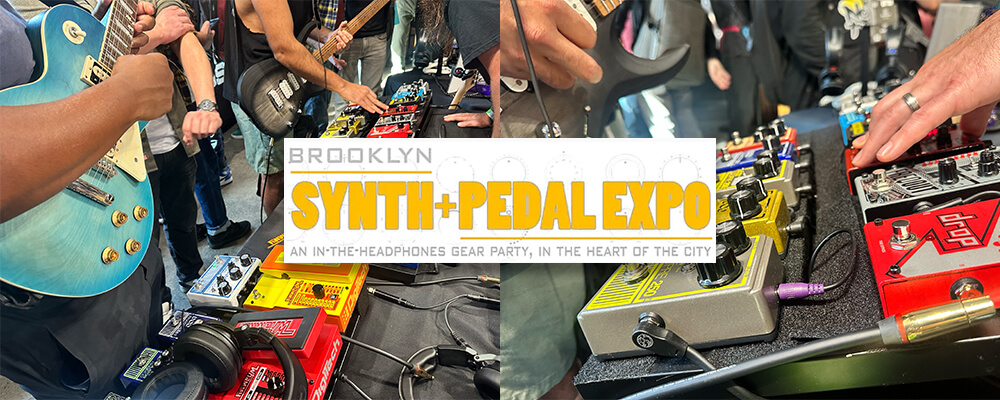
We just returned from the 2025 Synth and Pedal Expo in Brooklyn, NY. We’ve attended several of these events this year, and they have been a lot of fun. We want to thank everyone who came out to check out the pedals and to talk with us about our products and suggestions for the future. We take your feedback seriously.
For those who may not be familiar, the Synth and Pedal Expo is like a mini-NAMM show, but it focuses exclusively on synthesizers and pedals. This particular show was one of the largest organized by Paolo since the COVID pandemic, attracting an impressive 1,950 attendees. It was amazing to see so many people carrying their guitars and trying out pedals from manufacturers that aren’t always available in stores.
If you would like to find out when the next pedal show will be, visit:
This month, let’s dive into a pedal in the DOD product line that can be a secret gem on your pedalboard — a pedal that can give you a light country breakup to full, killer-sounding rock overdrive. We are talking about the DOD Looking Glass Overdrive.
Product Spotlight: DOD Looking Glass Overdrive
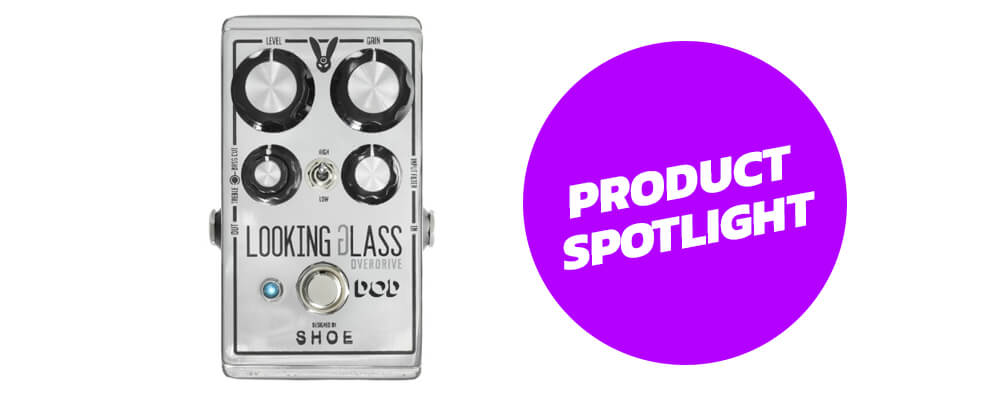
Dial in any raw, raunchy tone you desire with the DOD Looking Glass, a true-bypass analog overdrive and boost guitar pedal designed in collaboration with Shoe Pedals. Featuring Class A FET circuitry, this pedal produces a glassy boost and light overdrive reminiscent of a vintage amp pushed to its limits.
The Looking Glass offers two distinct gain modes (High and Low) that are easily controlled with a toggle switch. In the “Low” setting, the pedal delivers a clean boost, mild compression, and subtle overdrive, making it perfect for achieving that country breakup tone or a classic rock overdrive. For those looking for more intensity, engage the “High” setting for higher gain and saturation, resulting in thicker, crunchier tones.
To further customize your sound, the pedal includes versatile and intuitive pre-drive bass cut and post-drive treble controls. These features enable you to maintain clarity in your mix while dialing in any raw tone you desire. Additionally, the unique input filter control helps tame overly bright guitars and interacts with your guitar’s pickups, ensuring you cut through the mix without overwhelming your audience.
If you require even more adjustments for your perfect tone, the Looking Glass Overdrive comes equipped with internal DIP switches. Just remove the screws on the bottom of the pedal, and you will find the DIP switches. Here’s a brief description of their functions:
- Left switch: Increases the input impedance of the pedal.
- Right switch: Engages a darker voicing of the input filter.
For a demonstration, our friend Ford Thurston provides a run-through of the Looking Glass, which you can check out here:
Vintage Pedal Spotlight: DigiTech GSP 21 Legend
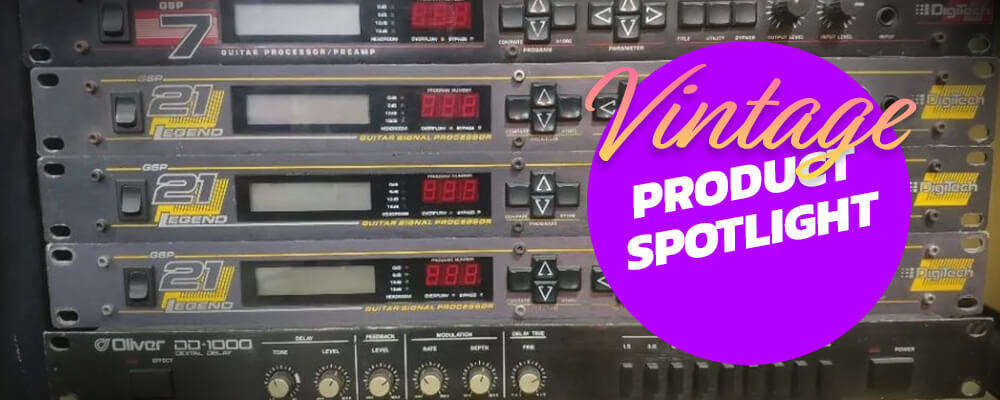
The DigiTech GSP 21 Legend is a rack-mounted multi-effects processor from 1992 that offers an impressive array of sound possibilities for guitarists. It was born from the GSP 21 Pro, the most successful guitar processor of its time. It supports full-bandwidth processing (20 Hz to 18 kHz) for a clean, high-fidelity signal path.
Among its core features, the GSP 21 Legend provides 24 different effect types that can be selected and utilized with up to 10 effects simultaneously in each preset. It includes a speaker/cabinet simulator, allowing users to connect “direct to board” for studio recording, utilizing the Legend’s preamp section and bypassing the need for a traditional guitar amp and cabinet mic setup. While this feature is common in today’s pedals and multi-effects units, it was groundbreaking for its time.
The unit also shipped with a full-function foot controller and a large bank of factory and user programs (128 programs in the Legend version), facilitating quick patch changes for live performances.
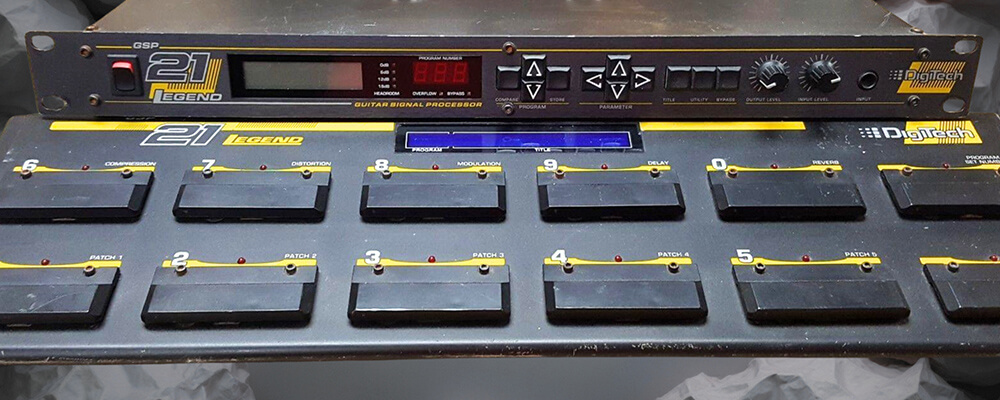
What made the GSP 21 Legend particularly stand out in its era was its combination of advanced digital architecture with flexible routing and practical live rig integration. Unlike many processors available at the time, it allowed users to place effects in series or parallel, enabling the combination of analog-style blocks (such as compression, various tube and analog distortion types, and a 7-band graphic EQ) with other effects like delays, reverbs, compression, chorus, flange, noise gate, filters, stereo imaging, and more in a single chain. Some of the factory presets were programmed by renowned guitar legends such as Ritchie Blackmore, Vernon Reid, Albert Lee, Frank Gambale, Reeves Gabrels, Dave “Snake” Sabo, Joe Walsh, and many more — covering a wide stylistic spectrum and giving users a head start in achieving professional sounds. For this product, we included a new effect that was added by request and specification from Steve Morse; this effect was called “Delay Modulation,” and it offered a whole new dimension to the digital delay.
For its time, the GSP 21 Legend essentially provided a full rack rig in one unit, making integration in both studio and live settings much smoother. Today, it is still regarded by some gear enthusiasts for its vintage versatility and routing flexibility.
However, rack-mounted processors have become less popular since the introduction of floorboard effects processors — a category in which DigiTech was a pioneer with the RP-1. But that’s a discussion for another time.
You can still find the GSP 21 Legend in some players’ rigs and on the used market. It’s a great addition to a home studio. We have one here in the office, and it’s a favorite among our employees who like to take some time out of their day to jam. It’s a great perk of working in the DigiTech / DOD office!
Until next time, keep creating!