It’s fascinating to realize that we have less than two months left in 2025. With the 2026 NAMM Show approaching, it’s exciting to anticipate the new products that DigiTech/DOD will unveil in 2026. However, before we get ahead of ourselves, let’s take a moment to take a second look at a pedal we introduced at last year’s NAMM Show. This pedal has captured the attention of many guitarists and bassists due to the unique and unusual sounds it produces through its pitch-jumping features.
Product Spotlight: DigiTech HammerOn
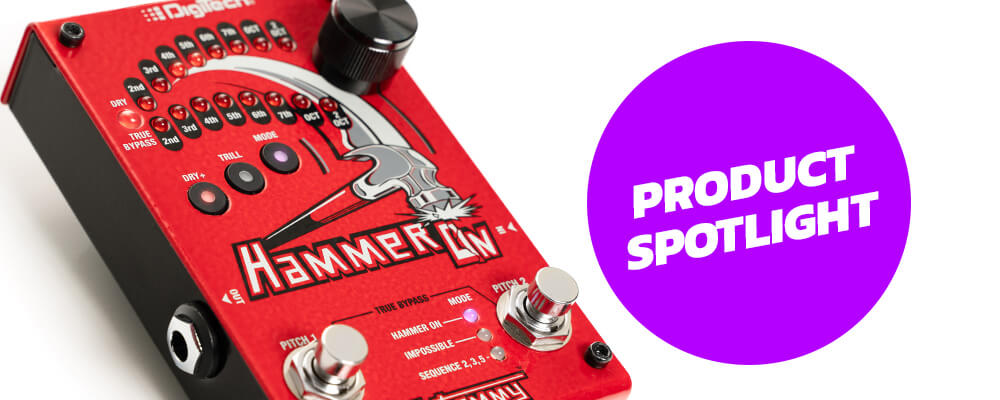
The HammerOn pedal offers seven different modes, making it an incredible and somewhat unconventional pitch-shifting device. These modes are: Hammer On, Impossible, SEQ, Drop, Capo (more on these two features in another newsletter), Harmony, and SEQ with Trill. This month, let’s focus specifically on the SEQ with Trill mode.
The HammerOn pedal introduces a pitch-sequencing capability, where you can program a sequence of pitch shifts (up or down) and then trigger them in rapid fashion. In its “Sequence” mode, you define a set of intervals (e.g., up +5 semitones, down −7 semitones, up +12 semitones), and then the pedal automatically steps through them. If we quote the manual, the SEQ + Trill mode “combines a programmable pitch sequence with the Trill function for an innovative new type of pitch-sequencing effect.” Meanwhile, the Trill feature itself “turns a single switch press into multiple rapid-fire pitch shifts,” so when used with the sequence, you get note jumps in fast or slow succession. You can control the tempo by turning the dial or using the Tap Tempo feature on the pedal.
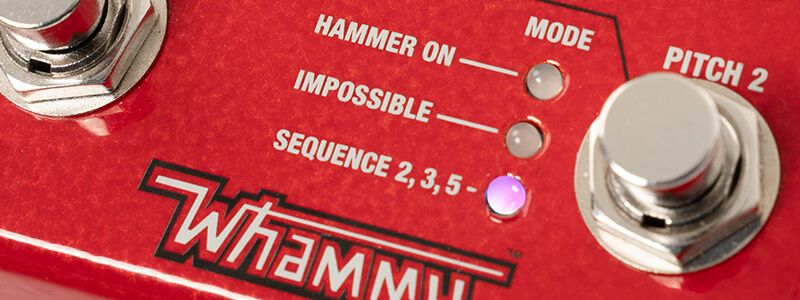
This means you can craft a riff where your guitar or bass note jumps instantly to a new pitch, then back and forth, and cycles through several pitches, creating a techno-like sequenced riff. For example, you might set the sequence to +12 semitones (one octave up), then −5 semitones, then +7 semitones, and engage Trill so that pressing the footswitch sends you through those jumps rapidly. Imagine a single sustained root note and the pedal zig-zags you through those pitch steps at rhythmic intervals. That creates a feel of “jumping” between notes—remember, you’re not physically fretting each note change but triggering them via the pedal. This effect is reminiscent of synth-style pitch sequencing but with a guitar or bass tone.
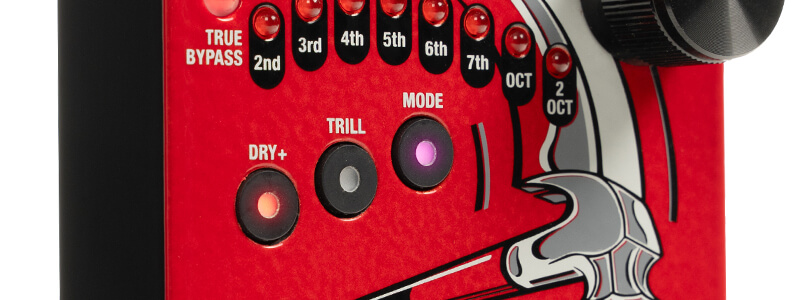
You can further shape the vibe by engaging the DRY+ mode (which mixes your dry guitar signal back in) while the sequence plus trill is active, giving you a layered, harmonized/techno-style sound. By combining transposed note jumps (say, root-to-fifth-to-octave) with high-speed Trill, you create a rhythmic riff that could sit in an electronic or techno-rock context. For instance, you might play a steady 8th-note riff on the open E string, hold the footswitch, and let HammerOn jump you through a programmed pitch sequence every 16th note or so — you end up with a cascading, repeating riff that feels mechanical yet expressive. The note-jumping becomes the hook. By choosing non-diatonic intervals in the sequence (e.g., +3, +7, +10 semitones), you can further lend a glitchy, “future-rock” edge to your guitar phrasing.
This mode opens you up to a whole new area of playing and song-creating styles that you have most likely never tried before. So, whether you are writing hit songs or just playing in the bedroom, the DigiTech HammerOn is guaranteed to give you hours and hours of fun and engaging guitar and bass time.
Here is a video from our friends at PMTVUK showing the HammerOn pedal in SEQ with TRILL mode engaged.
Vintage Pedal Spotlight: DigiTech Dirty Robot
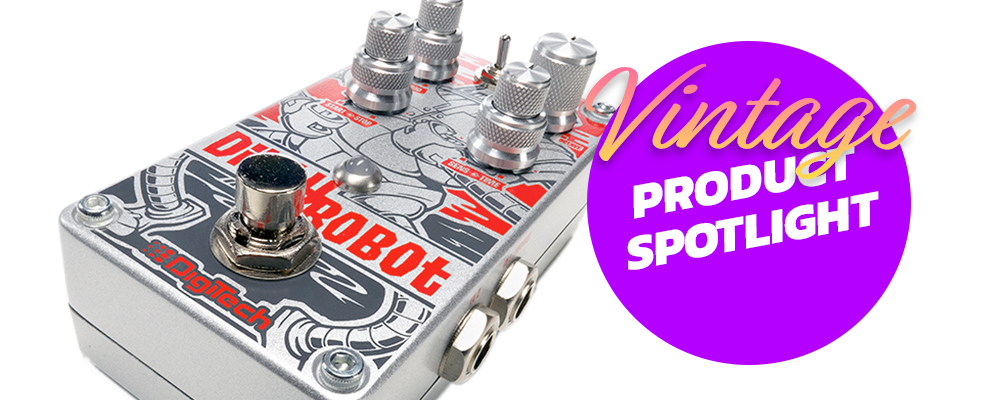
This product might not make the mark for a “vintage” pedal, but it has been out of production for a little bit. It’s an amazing pedal that both guitarists and bassists love. It was accepted as a “must-have” for bassists, but guitar players adapted some futuristic sounds to their music. It was ahead of its time and still produces amazing and usable effects for today’s ever-changing music.
The Dirty Robot was conceived as a guitar/bass-friendly synthesizer emulator in pedal form, offering players the ability to drastically morph their instrument’s sound into something much more otherworldly. It features two selectable synth voices:
- “V1” for an envelope-style synthesis evoking classic analog keyboard sweeps.
- “V2” for a vocal formant synthesis mode — think robotic vowel sounds, vocoder-style talk box effects.
On top of that, it included true-bypass circuitry and stereo inputs/outputs, meaning your original instrument’s tone isn’t tainted when it’s off, and you can incorporate stereo rigs for more spatial synth textures.
What set the Dirty Robot apart is its degree of control and flexibility in a compact enclosure. It has a unique “Drift” knob, which sweeps through and blends Square Wave, Sub-octave, and Octave synthesis modes, giving a wide palette from subtle synth enhancement to full-on weirdness. There are also concentric controls for Mix/Mod (wet/dry blend plus chorus/vibrato), Start/Stop sweep positions (or vowel-range positions), and Sensitivity/Time knobs, so you can fine-tune how the synth engine triggers and evolves.
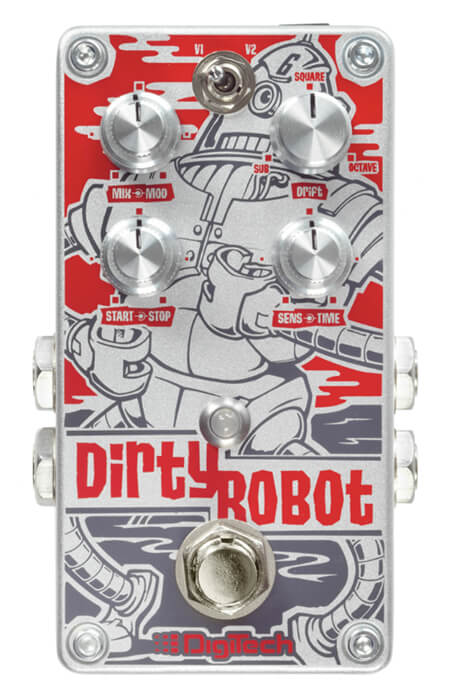
It offers excellent tracking, even when playing fast runs or chords, meaning you can get convincingly synth-like results from a standard guitar or bass without needing special pickups.
The Dirty Robot is more than a simple effect; it’s a creative tool for transforming guitar and bass into something synth-adjacent. Whether you use it for subtle colorization—like adding a synth layer under riffs—or use it for full sci-fi sweeps and robotic leads, it provides a unique sonic signature. Its compact size, standard 9V power supply, stereo in/outs, and true bypass make it pedalboard-ready. The Dirty Robot appeals to adventurous players looking to break out of conventional tones.
In short: the Dirty Robot isn’t just another fuzz or overdrive — it’s a mini-synth engine in stompbox form. Take a look online to find them on the used market, and without a doubt, pick one up for your pedalboard. You will love this pedal!
For an in-depth guitar run-through of the Dirty Robot, check out this video by our friends at Tone Report.
Bass players, don’t worry; we didn’t forget about you. Here is a great, no-talking run-through of the Dirty Robot:
— Until next time, keep creating! —